

When winter storms hit, commercial property owners often panic at the first sign of a ceiling leak. The immediate assumption is usually: “The roof has failed.”
But in many cases, it’s not roof damage at all – it’s snow and ice.
At TALTEK, we regularly help clients navigate winter weather-related leaks, insurance claims, and emergency response. Understanding how ice and snow impact your roof, and how to respond, can save you time, money, and stress.
Why Snow & Ice Cause Roof Leaks
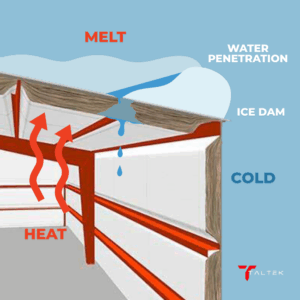
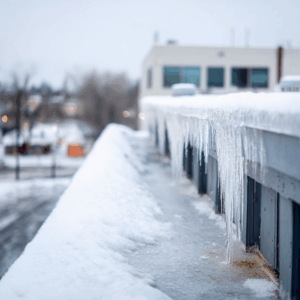
Winter leaks are commonly caused by ice damming – a buildup of ice created by freezing rain and repeated freeze/thaw cycles. As ice accumulates, it blocks proper drainage, forcing melting water to back up and find its way into the building.
Under normal rain conditions, your roof system may perform perfectly. But
heavy snow loads and ice dams create pressure and drainage challenges that roofs simply aren’t designed to handle continuously.
The good news? These leaks are typically not caused by roof failure and are often covered under commercial insurance policies.
What To Do Immediately If You Have a Winter Leak
If you notice active leaking during snow or ice events, here’s what to do:
- Prioritize Safety
Keep employees and occupants away from wet ceilings, light fixtures, and any standing water. Never attempt to access the roof during icy conditions.
- Protect Your Property
Move equipment, inventory, and furniture away from the leak path. Use buckets, tarps, and protective coverings to limit interior damage.
- Document Everything
Documentation is critical for insurance claims.
- Take a 10–15 second video of active leaking and state the date, time, and location.
- Capture photos in sequence: wide → medium → close.
- Photograph snow and ice buildup outside and on the roof if safely visible.
- Create a Simple Timeline
Write down when the leak started, what areas are affected, and whether it changes as temperatures fluctuate. This strengthens your claim and helps adjusters understand what happened.
How to Report It to Insurance
When reporting winter-related leaks, wording matters. In most cases, coverage applies to interior water damage caused by melting snow and ice – not roof failure.
Use this description as an example:
“Interior water damage to ceiling tiles, insulation, drywall, and flooring caused by melting and thawing of snow and ice.”
Avoid guessing about roof defects. Stick to observable facts and documented conditions.
How TALTEK Helps You Through the Process
TALTEK works alongside property managers, owners, and insurance adjusters to ensure claims move forward smoothly. Our services include:
- Professional roof inspections
- Moisture surveys
- Damage documentation
- Emergency mitigation coordination
- Repair and restoration planning

Our experience allows us to identify whether damage is storm-related and ensure proper documentation – helping you receive fair and accurate claim coverage.
Snow and ice leaks can feel overwhelming, but they’re often temporary conditions – not roofing failures. With the right response and documentation, insurance coverage typically applies, and damage can be mitigated quickly.
If winter weather impacts your building, TALTEK is here to help guide you through inspection, documentation, and repair – so you can stay focused on operations while we protect your investment.
Protect your roof – schedule an inspection today at taltekroofing.com.